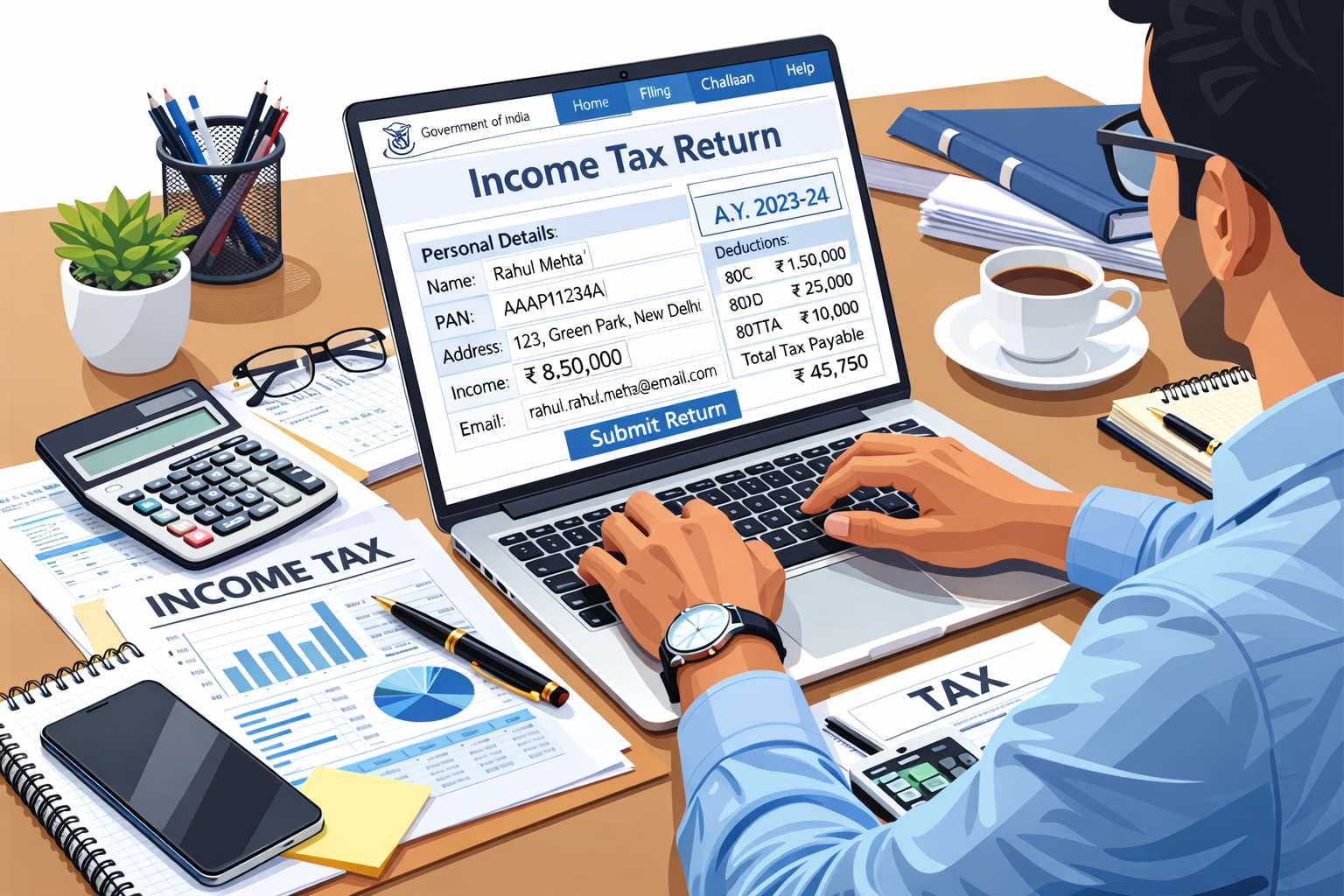
Form 16 is one of the most important documents for any tax-paying, salaried employee.
For any organization, collecting TDS from employees and depositing it to the government is an important and mandatory obligation. A crucial part of this obligation is providing Form 16 to their salaried employees so they can file their IT returns successfully.
To understand this whole process better, let us start by learning the definition of Form No. 16.
What is Form No. 16?
Under the Income Tax Act of 1961, Form No. 16 is a crucial TDS certificate provided by employers to individuals on their payroll as proof of the taxes deposited with the Income Tax department. If you are an employee at a company and observe TDS being deducted from your salary, then your employer is obligated to issue Form 16 to you.
Form 16 for salaried employees is an important document for filing IT returns and claiming refunds.
Components of Form No. 16 (Part A & Part B)
Form 16 is divided into two primary sections that every employer and employee should know about:
- Part A of Form 16
Part A of Form 16 includes the following sections:
-
- Name, Address, and TAN (Tax Deduction and Collection Account Number) of the employer
- Name, employment details, and PAN (Permanent Account Number) of the employee
- The duration for which the employee has been employed with the employer
- Details of the tax deducted and deposited with the government
- The financial year for which the tax is being deducted and deposited
- Part B of Form 16
Part B acts as an annexure to Part A, which includes details like:
- Calculation of total taxable income after all the deductions
- The breakdown of salary components, such as basic salary, allowances, and deductions
- Details about the tax paid, rebate, and tax payable
- Details of deductions claimed under Sections 80C, 80D, 80E, etc.
Why Form 16 Is Required?
Now that we have looked at the definition of Form 16 and the various components included in the document, let us explore the reasons that make it so important:
Proof of TDS Deducted From Salary
Form 16 is a document that can also double up as proof of income, and specifies that the employer deposited TDS. It can serve as evidence of your income and show that you are a tax-paying citizen for major financial transactions.
Necessary for Income Tax Filing
Form 16 must be provided by any employer to employees wherever TDS is applicable. Filing taxes can be simplified using Form 16 for salaried employees, as it contains important details like income, deductions, and the amount paid in taxes. It can also help you get accurate tax refunds.
Helps in Financial Documentation for Loans and Compliance
Form 16, when accurately filled and well-maintained, can prove useful as an important financial document when you want to apply for loans and adhere to necessary financial compliance. Your Form 16 is proof of stable income, helps providers assess loan eligibility, and confirms TDS and tax compliance.
4 Use Cases Form 16 is Used For
Next, we will learn more about what Form 16 is used for, and here are the primary use cases you should know about:
Filing Annual Income Tax Returns
If you are an employee eligible for a Form 16 TDS certificate, you must file annual income tax returns promptly. That said, filing IT returns should be much easier because you need to input details and fill out fields accurately. Form 16 will help you go through all these steps seamlessly without making any errors.
Claiming Exemptions or Deductions
When filing your IT returns, if you are eligible for a refund, Form 16 is the document that will help streamline the process. When used properly, Form 16 can help you claim applicable tax deductions based on the information filled out in Part B.
Salary Verification For Banks and Financial Institutions
Some financial transactions entail a background check or even a thorough analysis of your financial stability and income. For such transactions, banks and financial institutions can seamlessly verify your salary amount and employment status using Form 16.
Maintaining Proper Records For Auditing Purposes
By maintaining accurate financial and taxation records, you can ensure that all the necessary information is easily accessible if or when your company is being audited.
Steps to Follow When E-Filing Form 16
Now that we have learned about what Form 16 is, the reasons that make it so important, and some of its most important use cases. Let us explore the step-by-step process to follow when e-filing Form 16:
Step 1: How to Generate Form 16 and Download Digitally
By now, you must have already understood that creating and issuing Form 16 is employers’ prerogative. To download Form 16 digitally, you must visit and log in to the official website of the Income Tax Department of India using your credentials. If you are a new user, register on the portal by providing your contact details and PAN.
Once you are logged into your account, you can download Form 16 from the Forms/Downloads section of the My Account tab.
Step 2: Linking Form 16 with Form 26AS for Verification
Once you have filled out Form 16 for an employee, you must check and verify the details with the official tax records and ensure that you have calculated the employee’s TDS accurately using an online calculator.
This primarily entails checking every detail against Form 26AS to ensure that all the deducted TDS is promptly deposited to the government, PAN, and assessment year details, and salary and tax details.
Step 3: Submitting Form 16 to Employees
After Form 16 download and verification of the information included in Form 16, you can distribute it to your employees. Employees may use the document for filing their IT returns and more.
Step 4: Common Mistakes to Avoid During e-Filing
Some common errors and mistakes you must avoid when e-filing your Form 16 for IT returns include:
- Reconciliation errors caused by inaccuracies in TDS details, salary, and taxes paid, are mentioned in Form 16
- Failing to mention other income sources, such as interest income from deposits or payments from previous employers.
- Mentioning the wrong assessment year, incorrect PAN, or unvalidated bank accounts can delay refunds
- Selecting the wrong tax regime or not disclosing all the necessary details
Key Points to Remember About Form No 16
So there you go — we have explored every important detail you should know about when downloading, filling, distributing, and e-filing your Form 16. However, you must remember that the primary points to keep in mind about Form 16:
- Form 16 is mandatory for salaried employees who are eligible for TDS deduction
- Your Form 16 must contain accurate details such as gross salary, exemptions, and TDS for every quarter
- As an employer, you will issue Form 16 for all your salaried employees annually after the financial year ends
- An accurately and thoroughly filled Form 16 is crucial for smooth income tax filing
Frequently Asked Questions
1. What is Form 16, and who issues it?
Form 16 is a TDS certificate that is issued under Section 203 of the Income Tax Act for salaried employees. The document is issued by employers annually and details salary income and deductions.
2. Why is Form 16 required for salaried employees?
Form 16 proves that TDS has already been deducted and deposited with the government, ensuring tax compliance for companies and their employees.
3. What is Form 16 used for in income tax filing?
Form 16 provides all the necessary details and TDS-related specifics to simplify and help you pre-fill your IT returns for filing.
4. How can I e-file Form 16 as an employer?
As an employer, you can download Form 16 from the TRACES portal and issue it digitally to all the employees via the IT e-filing portal, after fully filing Form 24Q TDS.
5. Can Form 16 be corrected if there’s an error?
Yes, employers can seamlessly issue an edited and corrected Form 16 after revising the TDS returns on TRACES and notifying employees.
6. How does Form 16 help in claiming deductions and exemptions?
Part B of Form 16 lists all the eligible investments, exemptions, and allowances that will count towards ITR verification and claims.
Leave a Reply